The in-tray.
Work arrives — faxes, emails, uploads. Every document becomes a record: created, routed, clocked, tracked. The inbox-and-spreadsheet stand-in is gone.
Untangle. Run. Grow.
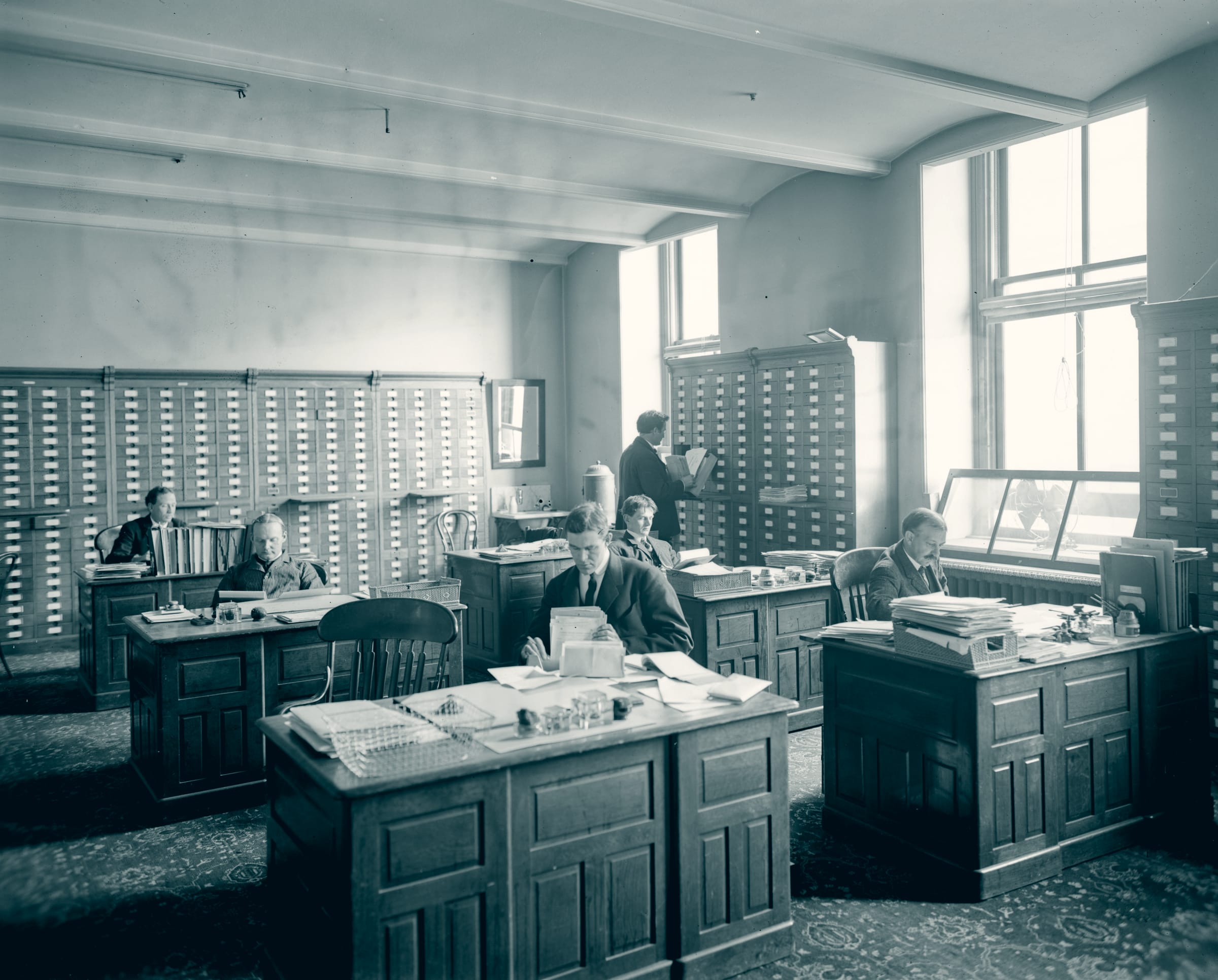
Every operation has one. The place where work lands, where the decision gets made, where the clock never stops.
We run one kind: the desk where documents arrive, a skilled human makes the call, and the clock matters.
Every AI company is selling the same promise right now. Agents that will run your business. Autonomous everything. And your gut says: not my desk.
Your gut is right about them. They build the agent first, then go looking for work for it to do — and the promise dies on exactly the things you know about your desk: the exception nobody wrote down, the spreadsheet the whole place runs on, the approval that lives in someone's head.
The AI was never the hard part. The desk is the hard part.
No one can run a desk they haven't learned — not a new hire, not an AI.
Here's the difference. They build the agent first. We learn the desk first — and every desk we've learned comes down to the same three parts.
Work arrives — faxes, emails, uploads. Every document becomes a record: created, routed, clocked, tracked. The inbox-and-spreadsheet stand-in is gone.
A skilled human makes the call — the pharmacist, the quality engineer, the underwriter. Marshall lays the file out open on the desk: evidence assembled, criteria surfaced, history attached. Judgment stays human. The clerical work around it doesn't.
Because every step was stamped and logged, the logbook pays back: cycle times, bottlenecks, SLA performance, benchmarks. Not a reporting tool bolted on later — a byproduct of a working desk.
In-tray, stamp, logbook. In that order.
The numbers are only real because the work was written down as it happened. Nobody can sell you a logbook for a desk that never kept one.
In production
A pharmacy prior authorization desk ran on faxes, emails, and a spreadsheet. A pharmacy tech read every fax twice. Determinations were chased through email threads.
The faxes and the email threads arrive exactly as they always did — but now they land in the in-tray. Marshall makes the record: parsed, OCR'd, routed, clocked. Nobody reads a fax twice.
The determination stays with the pharmacist. The file arrives laid out open on the desk; the pharmacist reviews, replies to the thread, stamps. The letter, the sending, the chasing — that's the desk's work now.
And every change goes into the logbook as it happens — who stamped, what moved, how long each step took. The numbers below are the logbook, read back.
Eight people at the desk daily — and they keep handing the desk more of the operation. The next piece is already signed.

“I have a very happy team downstairs. Marshall removed much of the manual grunt work, giving the team more time to focus on patients, medications, and the work that matters.”
We are not manufacturing experts. Nobody on this team has run a quality program.
Marshall's Process Engineer specialist designed a complete non-conformance and corrective action desk — the one every ISO-certified manufacturer is legally required to run when a part comes off the line wrong.
Same three parts. The bad part is written up the moment it's found, numbered the moment it's written, and walked all the way to fixed. A write-up that sits too long climbs. The calls stay with the quality engineer: how bad is it, what happens to this part, why did it happen. Each one is a stamp. And the logbook keeps the whole story, ready for the day the auditor asks.
Every desk on the floor is the working design of a real operation — what lands in the in-tray, who makes which call, when a file climbs, what the logbook counts. Free to walk up to. Free to study.
Take one, and we fit it to your operation: your in-trays, your systems, your team's way of working.
The design is free. The fitting is what you pay for.
Built on camera
On the floor today
pharmacy benefit operations
manufacturing quality
In the catalog
Built to fail first
Before a machine ships, it runs on the builder's floor with the buyer watching. Nobody argues about whether it works — everybody watches it run. The trade calls it an acceptance test.
Your desk gets the same. Except the test is written first.
We take your war stories — the report that sat expired for a month, the fax nobody caught, the approval that lived in someone's head — and write each one down as a drill. The drills run against your desk before it exists. Red, all of it. That's not a demo going wrong. That's the specification, written in your worst weeks.
Then the desk gets built, and the drills go green one by one. You watched it happen in the film — the wall of red, and then not.
Green is not a demo either. Green is the gate: the balance of your fitting is due when your drills run green, and not before.
And the drills never leave. After the fitting they stand at the desk — every war story you ever told us, permanently on duty, so the week that burned you once can't come back quietly.
Untangle — the fitting
We sit with your team and map how work actually moves — every in-tray, pile, exception, and workaround.
Marshall builds the desk from the design, wires it into your systems, and writes down who makes which call.
The repeatable work routes itself. Judgment stays with your experts. Every step is stamped and logged from day one.
No rip-and-replace. No eighteen-month implementation. Designed in a day, fitted in a week.
Run — the desk at work
A fax lands at 2 a.m. The in-tray catches it; the record exists before anyone pours coffee. The morning pile is already sorted — what's decided, what needs a human, what's late.
The skilled human does the one thing that needs them: the stamp. Everything before it and after it — parsing, routing, letters, logging — the desk does.
Nothing waits in someone's head. Exceptions surface with the file attached, not as a hallway question. The desk clock never stops, and the desk never takes a sick day.
The first thirty to sixty days tune it. Your real week shows up — the exception nobody mentioned, the rule that needed a second look — and each one gets written down and becomes part of the desk. What runs at day sixty is your week, not our first guess at it.
And the logbook fills. Every stamp, every clock, every handoff — written down as it happens. The record that pays back later is built now, for free, by the work itself.
Grow — where your desk goes
Two desks exist today — you've met both. The third one is yours.
A running desk earns more work. It's already happening in Michigan: the operation keeps handing the desk more.
A few months in, you know where the work stalls, which handoffs drop things, what late actually costs — it's all in the logbook. The next desk isn't a guess. You already know its name.
Your second desk goes up faster than your first. The wiring into your systems is already built, and your team already knows how to work with a desk.
You don't overhaul the place. You grow it — desk by desk.
You've had a desk in mind this whole page — the one your gut named.
Show us that one. We'll tell you honestly whether it's a good first desk, and show you what it looks like running.
Start the conversation →